A simpler form of this question might be: “Does truth change to line up with what I believe to be true?”
People today use the phrase “my truth”, as if their truth is isolated from the scrutiny of “other people’s truth”.
The popular way of articulating it is: “You have your truth, I have mine.”
The popular way of feeling about it is: “If you tell me your truth and I don’t agree with it, I have a right to be offended and angry. Keep your truth to yourself, it doesn’t apply to me!”
This type of mentality is a very recent societal development that has crept stealthily into the church. Christians refuse to acknowledge correction and anyone that presents truth that is contrary to their way of thinking is rejected at best and seen as evil at worst.
The ability to pull out God’s Word and study, presenting relevant scriptures is a skill that few have. Instead, they pull out a book written by someone that agrees with them and assign it the authority of God’s Word. It’s easier and it affirms them, rather than reproves them.
To see this mentality at play in a different setting, confront a friend about a recent event that hurt you and try to clear the air. Rather than re-examine what was said and who reacted in what way, they will become angry, scream out their truth, based on what they were feeling and believed to be true at the time. Then they will insist that you acknowledge their version of what happened and align your account of events with theirs.
They have no desire to examine actual truth and even if proof is presented, they deem it unimportant in the light of their feelings.
So, is it wrong to confront deception? What if it is going to harm the person that is being deceived? If a person is basing their beliefs and therefore their decisions on bad information and the end result is going to harm them, possibly for all eternity, shouldn’t we speak truth, so they can at least examine it?
If a person chooses to exalt God’s Word to the position of final authority in their lives and reject anything that doesn’t align with it, he or she has then arrived at the truth.
If they act in obedience to it, doing what it says, even when it’s hard, they have crossed the line and are now a ‘follower’ of Jesus. Jesus said, “Take up your cross and follow Me.” It’s at that point that we become His disciple.
The Word of God is to be a mirror so we can take a good long look at ourselves and see what areas of our lives need to be corrected, repented of and adjusted. Living life as if we are the final authority of what we do and say, makes us ‘Lord’ and not Jesus.
A humble believer asks God to show them truth whether it is what they want to see or not.
James 1:19-25 NASB
19 You know this, my beloved brothers and sisters. Now everyone must be quick to hear, slow to speak, and slow to anger; 20 for a man’s anger does not bring about the righteousness of God. 21 Therefore, ridding yourselves of all filthiness and all that remains of wickedness, in humility receive the word implanted, which is able to save your souls. 22 But prove yourselves doers of the word, and not just hearers who deceive themselves. 23 For if anyone is a hearer of the word and not a doer, he is like a man who looks at his natural face in a mirror; 24 for once he has looked at himself and gone away, he has immediately forgotten what kind of person he was.25 But one who has looked intently at the perfect law, the law of freedom, and has continued in it, not having become a forgetful hearer but an active doer, this person will be blessed in what he does.
Reading aloud or even hearing the Book of Revelation being read aloud brings a blessing, but there is a second stipulation to this blessing, and that is to take it to heart and keep what is written in it.
Revelation 1:3 NIV 3 Blessed is the one who reads aloud the words of this prophecy, and blessed are those who hear it and take to heart what is written in it, because the time is near.
Here’s the same verse in the King James Version:
Revelation 1:3 King James Version 3 Blessed is he that readeth, and they that hear the words of this prophecy, and keep those things which are written therein: for the time is at hand.
When I first read this promise, I was confused.. How do you “keep” the Book of Revelation? It’s mostly just prophesies about what is going to happen someday, how do you obey it, keep it or take it to heart? Other books are far more instructional. However, not wanting to miss the blessing, I went through the letters to the seven churches and compiled a list of admonitions and put them in my own words in a personal attempt to keep them.
Here’s how my summary read:
Come back to Me, your first love. Work for Me like you did at the beginning. Don’t be afraid of what you are about to suffer. Be faithful even when facing death.
Be victorious, don’t soil your clothing. Hold fast what you have received and keep it from dying. Repent and strengthen your relationship with me. Stay awake.
Buy from me gold refined in the fire. Buy clean, white clothes. Buy salve for your eyes. Be earnest and repent. Open the door to Me so we can eat and commune together.
Later in the last chapter of Revelation, He said:
Revelation 22:7 Behold, I come quickly: blessed is he that keepeth the sayings of the prophecy of this book.
None of these admonitions are about developing your ministry to others or spreading the gospel. They are about focusing on our own relationship with Jesus with the spotlight on the condition of the heart. We’re urged to wake up from our spiritual stupor and take our place at the feet of Jesus, pursuing His holiness.
Peter addressed this as well in I Peter chapter 2. He admonished us to rid ourselves of all malice, deceit, hypocrisy, envy and slander. Paul urged us to get rid of everything displeasing to God in Ephesians chapter 4, including emotions that lead to sin.
Ephesians 4:25-32 25 Therefore each of you must put off falsehood and speak truthfully to your neighbor, for we are all members of one body. 26 “In your anger do not sin”[d]: Do not let the sun go down while you are still angry, 27 and do not give the devil a foothold. 28 Anyone who has been stealing must steal no longer, but must work, doing something useful with their own hands, that they may have something to share with those in need.
29 Do not let any unwholesome talk come out of your mouths, but only what is helpful for building others up according to their needs, that it may benefit those who listen. 30 And do not grieve the Holy Spirit of God, with whom you were sealed for the day of redemption. 31 Get rid of all bitterness, rage and anger, brawling and slander, along with every form of malice. 32 Be kind and compassionate to one another, forgiving each other, just as in Christ God forgave you.
Everyone knows the “fear of the Lord is the beginning of wisdom”, but we also know that fear is a tool the devil uses to paralyze us and keep us from moving forward with God. So, what’s the difference?
The fear the devil brings is torment, whether it’s in the form of worry, or whether it is piercing and terrifying. It plagues the mind and stresses the body. This kind of fear causes heart attacks, ulcers and problems with the nervous system.
The fear of God is a deep, reverent respect for Him. This kind of fear makes us stop and consider our ways when we are tempted to disobey His Word. It is the knowledge that we will someday stand before Him in judgment. It is accompanied by a deep awareness that He is all-knowing, all-powerful and His Presence is everywhere. Those who possess the fear of the Lord understand that He is God and they are not. They cannot control Him, but they can trust Him and rest on His promises.
In the last days, we will either have the good kind of fear, or we will have the terror the enemy brings! Scripture says that Noah, “moved by fear, built the ark”. Here’s the verse:
Hebrews 11:7 KJV
By faith Noah, being warned of God of things not seen as yet, moved with fear, prepared an ark to the saving of his house; by the which he condemned the world, and became heir of the righteousness which is by faith.
Noah was moved to do something with the words God had spoken to him. He didn’t push them aside because the thought of a giant flood scared him. He believed the words that God spoke to him. In fact, he was so committed to obeying God that he embarked on a project that took nearly 100 years to complete. And, when it was complete, he received the promised salvation.
In Genesis 41, God gave Pharoah a dream and Joseph interpreted the meaning. There would be seven years with plenty of food followed by seven years of famine with nothing to eat. The Scripture doesn’t tell us if they experienced panic or not, but it does tell us that they immediately set about to store up food during the years of plenty.
Why? Because they reverenced the Word of God and took it at face value. They didn’t try to twist it or make it fit with their plans. Because they reverenced God and gave His Word the ultimate authority in their lives, they took action and saved not only all of Egypt, but the surrounding area from starvation.
Genesis 41:55-57 NASB
55 So when all the land of Egypt suffered famine, the people cried out to Pharaoh for bread; and Pharaoh said to all the Egyptians, “Go to Joseph; whatever he says to you, you shall do.” 56 When the famine was spread over the entire face of the earth, then Joseph opened all the storehouses and sold grain to the Egyptians; and the famine was severe in the land of Egypt. 57 Then the people of all the earth came to Egypt to buy grain from Joseph, because the famine was severe in all the earth.
What would have happened if they had not heeded God’s warning? What if they had dismissed it as a bad dream, or a misinterpretation?
Should we dismiss the possibility of a Post Tribulation Rapture without ever looking to see what God’s Word says about it? If the “fear of the Lord is the beginning of wisdom” shouldn’t we have the reverence and respect to find out what God says in His Word about the timing of the rapture?
Psalm 111:10 NASB
10 The fear of the Lord is the beginning of wisdom; All those who follow His commandments have a good understanding; His praise endures forever.
When Jesus was on the Mt. of Olives with His disciples telling them about how end-times would unfold, Matthew included details in his book that the other gospel accounts didn’t.
We read Matthew 24, Luke 21 and Mark 13 and assume that since they are all recording the same teaching session that Jesus stopped at the end of one chapter.
But Matthew continued to record the parables that followed. This was the same teaching session on the same day. The chapter and verse divisions were not inserted until centuries later. There would have been nothing to separate Matthew 24 from Matthew 25 because they were one message delivered by Jesus on the Mount of Olives.
With that background knowledge, read the parable of the Ten Virgins.
Matthew 24:1-13
“Then the kingdom of heaven will be comparable to ten virgins, who took their lamps and went out to meet the groom. 2 Five of them were foolish, and five were prudent. 3 For when the foolish took their lamps, they did not take extra oil with them; 4 but the prudent ones took oil in flasks with their lamps. 5 Now while the groom was delaying, they all became drowsy and began to sleep. 6 But at midnight there finally was a shout: ‘Behold, the groom! Come out to meet him.’ 7 Then all those virgins got up and trimmed their lamps. 8 But the foolish virgins said to the prudent ones, ‘Give us some of your oil, because our lamps are going out.’9 However, the prudent ones answered, ‘No, there most certainly would not be enough for us and you too; go instead to the merchants and buy some for yourselves.’ 10 But while they were on their way to buy the oil, the groom came, and those who were ready went in with him to the wedding feast; and the door was shut. 11 Yet later, the other virgins also came, saying, ‘Lord, lord, open up for us.’ 12 But he answered, ‘Truly I say to you, I do not know you.’ 13 Be on the alert then, because you do not know the day nor the hour.
There are a few things I want you to notice about this passage.
The foolish virgins weren’t locked out of the wedding because they weren’t virgins.
They weren’t locked out because they fell asleep, even the wise virgins were asleep.
The foolish virgins weren’t locked out of the wedding because the bridegroom came earlier than they expected. Scripture indicates He was ‘delayed’ and came later than expected.
The foolish virgins were not locked out because the wise virgins were heartless and didn’t give them what they felt so entitled to.
These virgins knew He was coming. They didn’t know exactly when, but they were still unprepared. They brought enough oil in their estimation, but they never considered He might not come as early as they expected Him to come. It apparently never occurred to them to be ready for a late arrival.
I’ve heard all kinds of teaching on this passage. The most common is that the oil represents the Holy Spirit and they ran out of the Holy Spirit before Jesus got here. Therefore, we need to keep oil in our lamps.
It’s interesting that this common interpretation doesn’t really fit with common sense. The wise virgins, the ones with plenty of the Holy Spirit, not just in their lamps, but also in extra flasks, refused to share the Holy Spirit with those that asked and told them to go BUY their own oil! Apparently, these heartless individuals didn’t share the gospel with the foolish, didn’t share the light of their lamps, or offer to wait on them while they got oil!
As a teenager, I puzzled over this interpretation. It made no sense to me in light of the rest of scripture.
As an adult, I dug into the meaning of this word ‘oil’. In the original text it was “e’-lī-on” and means … olive oil.
Clearly, olive oil had many spiritual purposes. It was used to anoint the kings of the Old Testament. It was used to anoint the sick and has continued to hold an important place in the church. But this same word, e’-lī-on, is used many times as just … olive oil.
Here are a couple of them:
Revelation 6:6 KJV
6And I heard a voice in the midst of the four beasts say, A measure of wheat for a penny, and three measures of barley for a penny; and see thou hurt not the oil and the wine.
Here’s another one, and I am including several verses to show it in context:
Revelation 18:11-13 KJV
11 And the merchants of the earth shall weep and mourn over her; for no man buyeth their merchandise any more:
12 The merchandise of gold, and silver, and precious stones, and of pearls, and fine linen, and purple, and silk, and scarlet, and all thyine wood, and all manner vessels of ivory, and all manner vessels of most precious wood, and of brass, and iron, and marble,
13 And cinnamon, and odours, and ointments, and frankincense, and wine, and oil, and fine flour, and wheat, and beasts, and sheep, and horses, and chariots, and slaves, and souls of men.
In this case, it is talking about the things that Mystery Babylon bought from the merchants of the earth. It is clear from this context that sometimes “e’-lī-on” just means olive oil. So not every time the word ‘oil’ is mentioned in scripture does it mean anointing oil or the oil of the Holy Spirit.
Since the five wise virgins refused to share, I think it is clear they are talking about fuel for their lamps. They sent the foolish ones away to buy more oil from dealers. True Christians do not send others away when they are seeking God, especially to go find Him in some market!
If oil literally means olive oil, a substance that is used to sustain life in the Middle East, what was Jesus saying in this parable?
It is clear that even though the five wise virgins were weary and even sleeping, they had prepared and made sure they had what was necessary to get through until the Bridegroom came. They may not have been the most generous with it, but they had enough to make it into the wedding feast!
So why weren’t the foolish virgins admitted to the wedding after they arrived late with their oil? The verse below makes it clear why they were disqualified from entering the wedding.
Revelation 13:17 NASB
16 And he causes all, the small and the great, the rich and the poor, and the free and the slaves, to be given a mark on their right hands or on their foreheads, 17 and he decrees that no one will be able to buy or to sell, except the one who has the mark, either the name of the beast or the number of his name.
Taking the mark won’t seem like a problem to a lot of Christians! In fact, they won’t believe it is really the Mark of the Beast or that the Anti-Christ is even the beast, because they didn’t go up in a Pre-Tribulation Rapture. Jesus warned us again and again not to be deceived! This means it IS possible to be deceived!
There are severe consequences for taking the mark.
Revelation 14:8-10 NASB
9 Then another angel, a third one, followed them, saying with a loud voice, “If anyone worships the beast and his image, and receives a mark on his forehead or on his hand, 10 he also will drink of the wine of the wrath of God, which is mixed in full strength in the cup of His anger; and he will be tormented with fire and brimstone in the presence of the holy angels and in the presence of the Lamb.
This is why you need to sort out what you believe about the timing of the rapture now. If you’re not paying attention because you don’t think you have to, the great tribulation can overtake you without you being aware it is so close.
If you believe the rapture is the next event to happen, you won’t be looking for and preparing for the events that Jesus told us were coming upon the earth prior to His Second Coming. (Read Matt. 24, Luke 21, Mark 13) You will simply be waiting to be raptured.
The mark may be implemented before you realize that there isn’t a single scripture that says there is a secret, silent rapture before Jesus’ glorious Second Coming. Not one. Take on the challenge of trying to find it in your Bible now.
When discussing the Post Tribulation Rapture doctrine with a friend, her immediate response was not, “What does the Bible say?” It was more on the order of ‘You’re crazy! We could never live without electricity and grocery stores! We’ll all die!’
Less than 150 years ago many people had neither, but because of their grit, determination and hard work they survived and even thrived! They didn’t believe that electricity, an unknown force at the time, was their right, or that every scrap of food they ate should be produced by others.
When I brought this up, she looked at me wide-eyed and said, ‘But that’s not how we live now! We don’t know how to survive like that, we’d die!’
I didn’t know what to say to her at the time. She was right, and suddenly I knew the scriptures I had prepared to share with her would seem invalid or at least unimportant in light of the fact that the grid might be down in the future.
I reflected later upon the change that had taken place inside of me since I began a serious study of this subject. At the beginning, it had seemed inconceivable that we would be expected to live during the time of Tribulation. But once I understood that God’s wrath is not poured out until the Day of the Lord, I was able to separate ‘tribulation’ from ‘wrath’ and it changed my thinking.
I Thessalonians 5:9-10
9 For God hath not appointed us to wrath, but to obtain salvation by our Lord Jesus Christ,
10 Who died for us, that, whether we wake or sleep, we should live together with him.
Does this scripture mean that we are raptured out of the earth at the beginning in a Pre-Tribulation Rapture? No! Nowhere in this passage does it say that! In fact, in the next letter to this very same church, Paul gave two events that have to happen before the Day of the Lord:
II Thessalonians 2:1-4
1Now we beseech you, brethren, by the coming of our Lord Jesus Christ, and by our gathering together unto him,
2 That ye be not soon shaken in mind, or be troubled, neither by spirit, nor by word, nor by letter as from us, as that the day of Christ is at hand.
3 Let no man deceive you by any means: for that day shall not come, except there come a falling away first, and that man of sin be revealed, the son of perdition;
4 Who opposeth and exalteth himself above all that is called God, or that is worshipped; so that he as God sitteth in the temple of God, shewing himself that he is God.
(This passage is discussed in detail in my book, “Where’s Jesus? I thought He’d be here by now!”)
So, if we are here on the earth during the Tribulation, won’t we be the unintentional victim of God’s wrath? According to Peter, the answer is no.
II Peter 2:9 KJV
The Lord knoweth how to deliver the godly out of temptations, and to reserve the unjust unto the day of judgment to be punished:
So, how did studying God’s Word change my thinking from a state of fear and outright rejection of truth to a state of purposeful calm?
I wondered, how did I get here, and how can I bring others along with me?
I believe the first step is to show people what God’s Word says about the timing of the rapture. No, I’m not taking about the day or the hour, just the order of events as laid out in God’s Word. And, yes, there is one!
Next, they need to be convinced of God’s love for them. If you are not convinced that God loves you, you will not trust Him when you need Him most. He is just and right. He is not going to punish the righteous with the wicked. We don’t have to be worried about being a victim of ‘friendly fire’. Even if He judges the wicked who live beside us, He will distinguish between us and them.
Often people take on the label ‘Christian’ but they are not, He knows the difference between those who follow and obey, and those that merely identify with Him. If you are not living as life of obedience, you have reason to fear Him!
To enjoy calm peace when the rest of the world is in a state of panic will take a deep reliance on His divine justice. I believe Noah had peace while in the ark, certainly Shadrach, Meshach and Abednego had it in the fiery furnace. Daniel had it in the lion’s den. None of them were whisked out of danger or raptured before enduring the trial. They survived and thrived, determined to stay faithful to God even if they were killed for their faith.
The book of Jude is only one short chapter, and it would do us all good to read the entire chapter. He starts off exhorting us to “contend for the faith”. This is not a passive action.
Jude 3-4 NASB
3 Beloved, while I was making every effort to write you about our common salvation, I felt the necessity to write to you appealing that you contend earnestly for the faith that was once for all time handed down to the saints.
According to Vine’s Expository Dictionary, the phrase “to contend earnestly” means to contend as a combatant!
Gear up to fight! Of course, this is a spiritual fight and not a physical fight. So, what are we fighting for? If you read this carefully, we are contending for truth and ultimately for souls, and these are the people we are up against.
Jude NASB
4 For certain people have crept in unnoticed, those who were long beforehand marked out for this condemnation, ungodly persons who turn the grace of our God into indecent behavior and deny our only Master and Lord, Jesus Christ…
17 But you, beloved, ought to remember the words that were spoken beforehand by the apostles of our Lord Jesus Christ, 18 that they were saying to you, “In the last time there will be mockers, following after their own ungodly lusts.” 19 These are the ones who cause divisions, worldly-minded, devoid of the Spirit.
Contending earnestly for the faith is not a passive thing, it is war! It involves weapons, not physical weapons, but spiritual weapons used in spiritual warfare. Paul explains …
I Corinthians 10:3-5 NIV
3 For though we live in the world, we do not wage war as the world does. 4 The weapons we fight with are not the weapons of the world. On the contrary, they have divine power to demolish strongholds. 5 We demolish arguments and every pretension that sets itself up against the knowledge of God, and we take captive every thought to make it obedient to Christ.
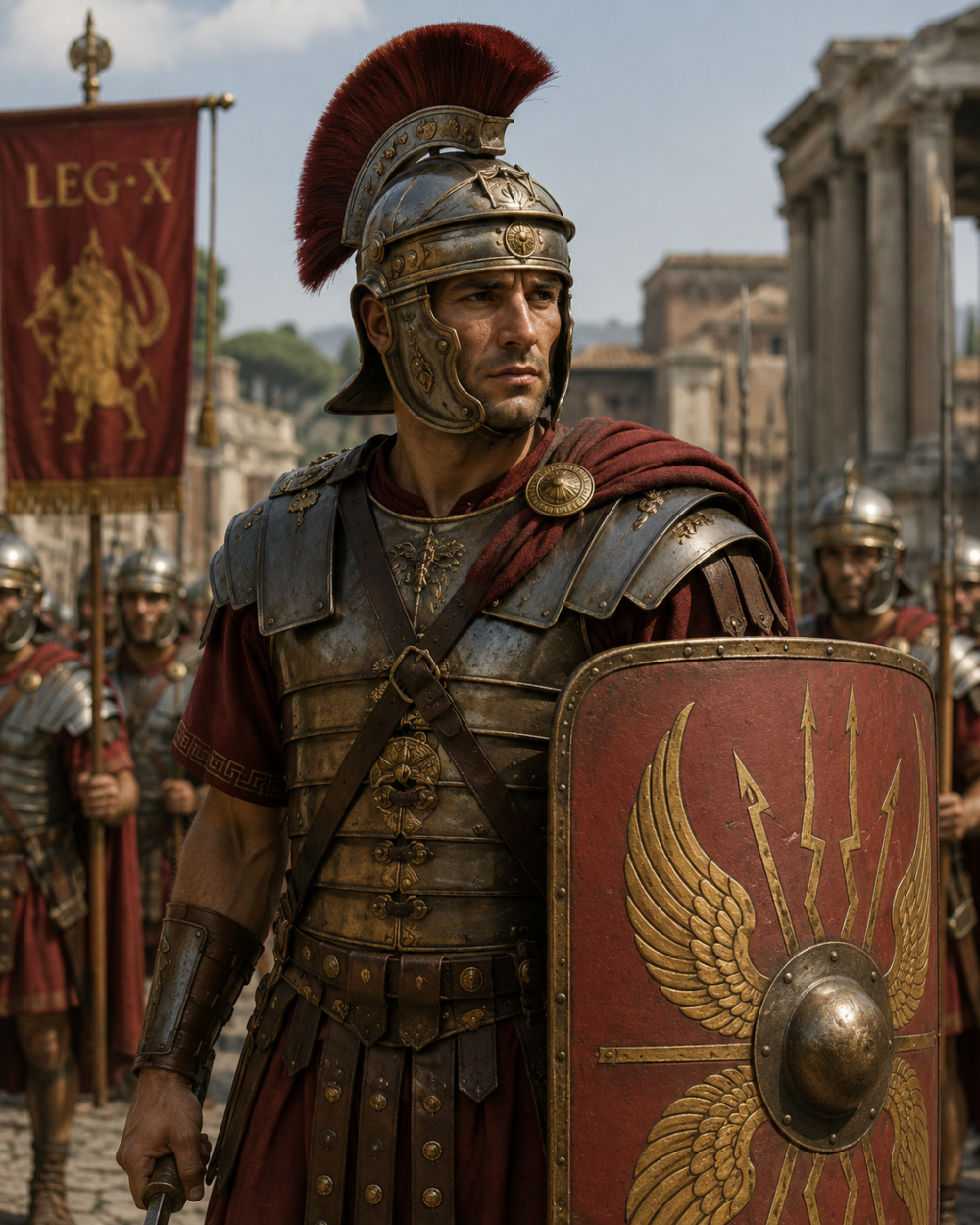
… and even requires a spiritual uniform! Paul used the example of the Roman soldier’s uniform that he saw every day.
Ephesians 6:11-17 NIV
11 Put on the full armor of God, so that you can take your stand against the devil’s schemes. 12 For our struggle is not against flesh and blood, but against the rulers, against the authorities, against the powers of this dark world and against the spiritual forces of evil in the heavenly realms. 13 Therefore put on the full armor of God, so that when the day of evil comes, you may be able to stand your ground, and after you have done everything, to stand. 14 Stand firm then, with the belt of truth buckled around your waist, with the breastplate of righteousness in place, 15 and with your feet fitted with the readiness that comes from the gospel of peace. 16 In addition to all this, take up the shield of faith, with which you can extinguish all the flaming arrows of the evil one. 17 Take the helmet of salvation and the sword of the Spirit, which is the word of God.
Here is Jude’s final instruction to believers:
Jude 20-23 NASB
20 But you, beloved, building yourselves up on your most holy faith, praying in the Holy Spirit, 21 keep yourselves in the love of God, looking forward to the mercy of our Lord Jesus Christ to eternal life. 22 And have mercy on some, who are doubting; 23 save others, snatching them out of the fire; and on some have mercy with fear, hating even the garment polluted by the flesh.
And, here is what Jude says God will do in response:
24 Now to Him who is able to protect you from stumbling, and to make you stand in the presence of His glory, blameless with great joy, 25 to the only God our Savior, through Jesus Christ our Lord, be glory, majesty, dominion, and authority before all time and now and forever. Amen.
There are a lot of books, blogs and sermons written about how to deal with feelings of various types. In fact, there are Bible promise books that are categorized in sections according to how the reader is feeling that day. There’s nothing wrong with any of this, I’ve found them all helpful at some point or another. But feelings shouldn’t be given a place of priority.
In fact, we should be bringing our feelings into subjection to God’s Word. Here’s Eugene Peterson’s interpretation of II Peter 3:3-4.
First off, you need to know that in the last days, mockers are going to have a heyday. Reducing everything to the level of their pettyfeelings, they’ll mock, “So what’s happened to the promise of his Coming…
Paul in Galatians 5:26 speaks of feelings of jealousy and envy. Peter speaks of feelings of hatred. Paul does a deep dive into the subject of unholy feelings in Ephesians chapter 4 and tells us to rid ourselves of them.
Our society is obsessed with how we feel. Introspection and self-absorption is at an all-time high. Young people don’t interact in the ways they used to because they are so busy obsessing over their online image. Fear and vulnerability sometimes make personal interactions too risky.
God hasn’t given us a spirit of fear but of power, love and a sound mind. (II Timothy 1:7) Yet, fear of rejection is one of the most powerful forces in the world today.
How do we bring our feelings into line with God’s Word? Why is it so important in these last days to find the answers to these questions?
Thoughts lead to Feelings
Feelings lead to Actions
Actions build Character
Character determines Lifestyle
And, your Lifestyle sums up the kind of person you are!
Casting down imaginations, and every high thing that exalteth itself against the knowledge of God, and bringing into captivity every thought to the obedience of Christ;
On the day of this writing, I feel exhausted, mentally, physically and emotionally. Weariness can overwhelm our spiritual fortitude and hinder our ability to endure whatever struggle we are determined to overcome.
So much of life here on earth is about grit and commitment. We get worn down and sense that our strength is waning.
Nehemiah 8:10b KJV …The joy of the Lord is my strength.
The NASB translates it like this: “…The joy of the Lord is your refuge.”
If we’re going through a time of prolonged physical illness or if we are recovering from an injury, the strength joy offers may feel illusive and hard to secure.
We think of joy as an ecstatic emotion that causes us to jump up and down, but that isn’t necessarily the biblical definition. A more accurate definition would be “gladness”.
What are you glad about? You might say, “I’m glad I don’t live on the streets.” After some reflection you might say, I’m glad I had something to eat today.” Or “I’m glad my electricity is on.”
Sounds like thanksgiving, doesn’t it? “I’m so glad I have my little dog.” Or “I’m so glad my husband did that for me!”
Finding something to be glad about gives us the strength we need but didn’t know we had access to.
I Chronicles 16:43
43Give thanks to the Lord, for He is good; For His faithfulness is everlasting.